This tool was built for PC screens (1920×1080 and up) with a keyboard and mouse. It will probably not work pleasantly on a mobile screen.
Design or import, preview in 3D, and stream G-code straight to your ESP32/FluidNC or GRBL machine over USB or Wi-Fi. 2–5 axis. No install, no signup, no export limits.
Built by Pete Scheepens, the maker behind FoamCube — machines shipped to makers worldwide since 2015. Why cncfoam →
Import an SVG, DXF or G-code file (or an STL/OBJ 3D model), set your machine size, foam block, feed speed and wire temperature, and the tool simulates the cut and computes the cut time and a solid 3D preview before you melt any foam. It cuts ruled surfaces: straight extrusions (2-axis), tapered and twisted wings and airfoils via a two-profile morph (4-axis X/Y + U/V), lofted shapes, ducts, helical columns and ruled-surface architecture, plus indexed-rotation parts on 3/5-axis rigs.
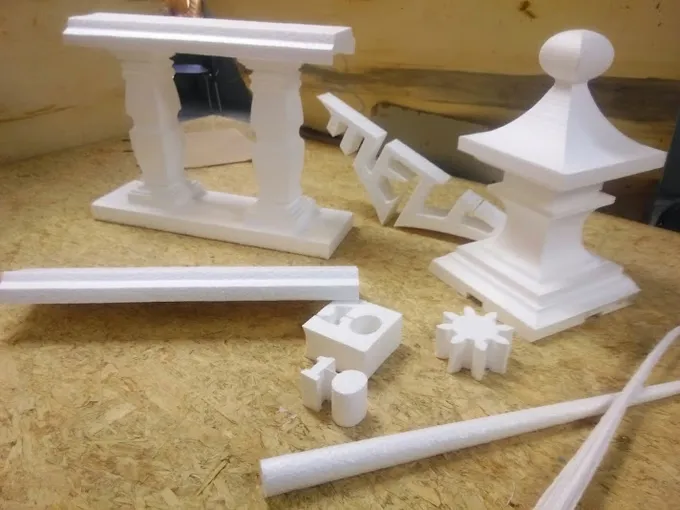
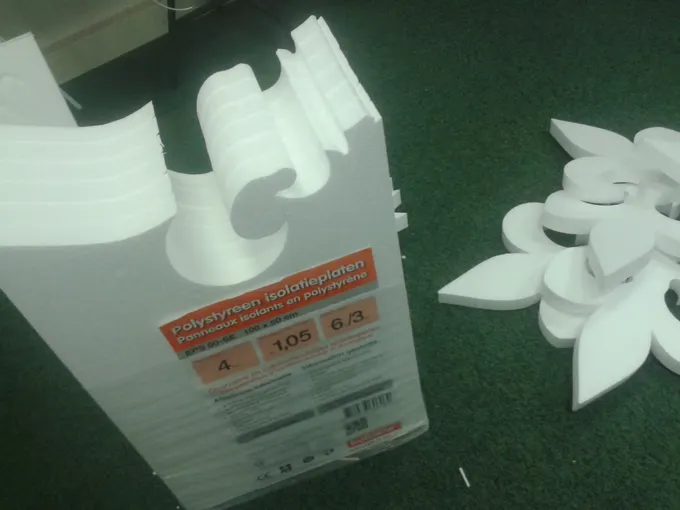
Real cuts, not renders — foam cut on a real machine:
Built by a real maker · FoamCut alternative · FluidNC foam cutter · Jet & RC wing presets · What it makes · Shape library · Wiki · Build the hardware
| Orbit | drag / arrows |
| Pan | shift-drag / right-drag |
| Zoom | wheel / + − |
| Play / Pause | space |
| Rewind | R |
| Reset view | Home / F |
Pick what the machine should cut. Two ways: a single shape repeated on both sides, or a different profile per side (morph).
One profile, repeated on both ends. Optional twist between them to create helical shapes.
Different profile per side. The wire morphs between them along Z.
Cut a shape, then rotate the foam by an angle on the A axis, repeat, or cut a whole new shape, rotate …… Up to 12 stages.
A hot wire only makes straight cuts, so it can't reproduce every model exactly. We approximate your model by its silhouette from many angles — the “visual hull”, which is the best a foam cutter can physically do.
Spin the model around its longest / most-detailed axis. The wrong axis gives a mushy result.
Tip: 12 is plenty for most shapes; the hull barely changes past ~24–36.
Generate a foam RC / EDF jet wing panel from NACA 4-digit aerofoils — or pick a named profile (MH45, Clark Y, …) for flying wings and gliders. The 4 NACA digits are max camber %, camber position (×10%), and thickness % — e.g. 2412 = 2% camber at 40% chord, 12% thick; 0009 = symmetric, 9% thick. Set a smaller tip chord for taper, a different tip aerofoil to blend, plus sweep and washout. Cut as a 4-wire morph from root to tip.
Straight wing: set tip chord = root chord, sweep 0. Washout twists the tip down for gentle stalls (pivots about the ¼-chord). Wings cut as one panel — cut a mirrored pair (flip the G-code or the foam for the second side). Tower paths are auto-projected for your block position. Wings & NACA explained → · Spar tunnel →
You need a free account to publish to the public Shape library. New shapes are reviewed before going live.
There is no private library yet — everything you publish is public.